
How to Choose Wall Art That Complements Your Furniture (Without Matching Everything)
One of the biggest misconceptions in home decor is this:
Wall art must match the sofa.
In reality, perfectly matching furniture and artwork often makes a room feel flat, predictable, and overly coordinated.
Designer spaces don’t “match.”
They balance.
Here’s how to choose wall art that complements your furniture — without turning your living room into a showroom set.

1. Match the Mood, Not the Color
Instead of asking:
“Does this art have the same beige as my couch?”
Ask:
“Does this art create the same feeling as my space?”
For example:
-
A soft linen sofa pairs beautifully with textured, neutral canvas.
-
A bold modern sectional works well with abstract, confident forms.
-
A warm wood interior benefits from organic, earthy tones.
When mood aligns, the room feels cohesive — even if colors aren’t identical.
2. Use Contrast Intentionally
Good design includes contrast.
If your furniture is:
-
Minimal and neutral → Add depth through textured or layered artwork.
-
Dark and heavy → Introduce lighter-toned art to create balance.
-
Soft and organic → Consider structured or abstract pieces for tension.
Contrast prevents the room from feeling one-dimensional.
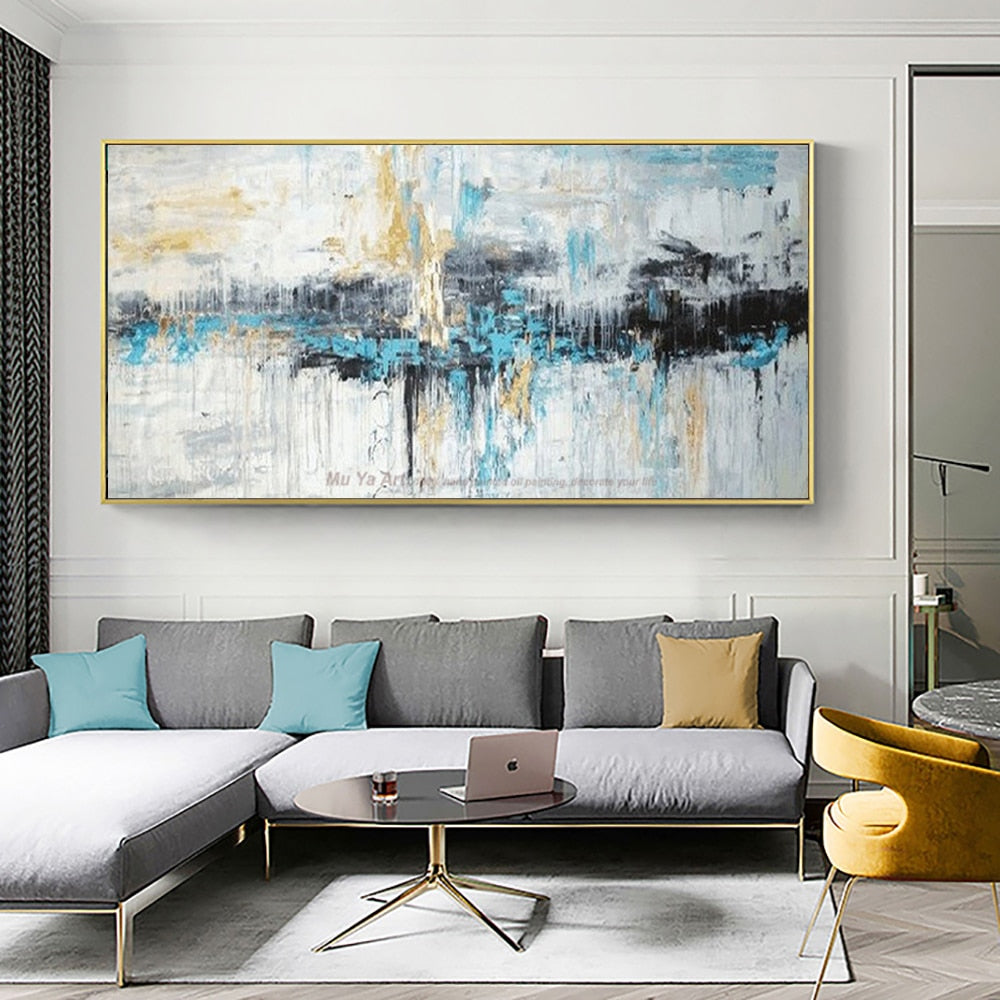
3. Focus on Scale Before Color
Before worrying about shades, confirm proportion.
Artwork above a sofa should:
-
Span 60–75% of the sofa width
-
Be centered
-
Hang 6–10 inches above the backrest
Even perfectly colored art will look wrong if it’s too small.
Scale determines success more than palette.
4. Pull One Tone — Not All of Them
You don’t need to replicate every color in your furniture.
Instead:
-
Select artwork that references one subtle tone from the room.
-
Let the rest of the composition introduce gentle variation.
This creates cohesion without monotony.
Rooms feel elevated when tones echo — not duplicate.
5. Consider the Room’s Architecture
Wall art should relate to more than furniture.
Pay attention to:
-
Ceiling height
-
Window placement
-
Wall width
-
Natural light
Horizontal art enhances wide sofas.
Vertical art emphasizes height.
Large-scale pieces stabilize open layouts.
When artwork aligns with the structure, the room feels intentional.
6. Avoid Overly Literal Pairing
A modern gray sofa does not require gray abstract art.
Over-coordination can feel staged.
Instead:
-
Layer warmth into cool rooms
-
Add softness to structured furniture
-
Introduce movement where line
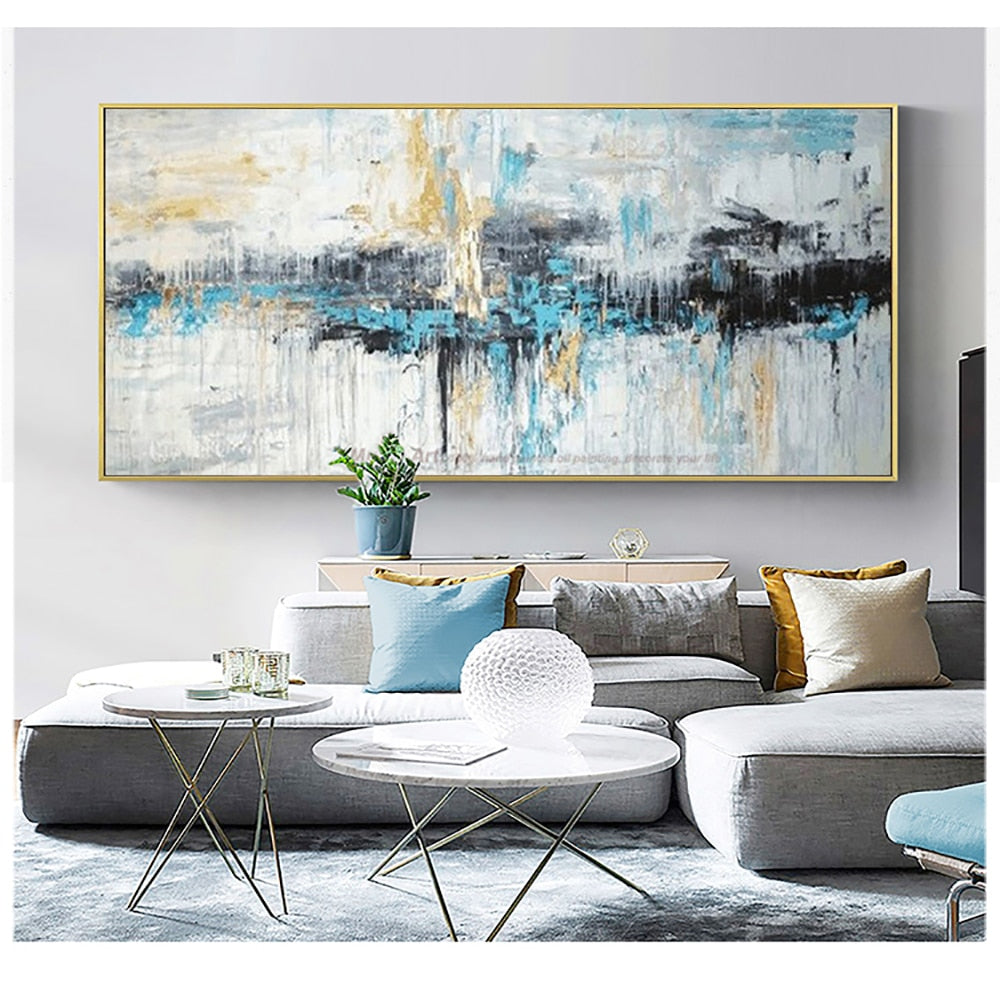 s feel rigid
The goal is harmony — not uniformity.7. Let One Piece Lead the Space
Strong rooms often revolve around a single defining element.
If your wall art is bold and expressive:
-
Keep furniture clean and supportive.
If your furniture is the statement:
-
Choose artwork that enhances without overpowering.
Balance comes from hierarchy.
The Designer Rule to Remember
Complement. Don’t copy.
Balance. Don’t match.
Scale. Then style.
When wall art interacts naturally with furniture — instead of mimicking it — the room feels curated rather than assembled.

Ready to Find the Right Piece for Your Space?
Explore statement-scale wall art designed to work with modern furniture proportions — without requiring perfect color matches. SallyHomey collections focus on balance, texture, and architectural alignment so your space feels cohesive, not coordinated.
If you’re styling above a sofa, console, or dining area, start by choosing presence over perfection.
Browse thoughtfully proportioned designs or continue reading our guides to refine your interior step by step.
Next in this series: One Large Artwork vs. Multiple Small Pieces — Which Works Better for Your Space?