
Oversized Art for Large Walls: How to Make a Statement Without Overloading the Room
Large walls can feel intimidating.
They’re too big for small décor — yet filling them incorrectly can make a room feel heavy or chaotic. Many homeowners try to solve this by adding multiple small pieces, but that usually makes the space feel fragmented.
The real solution is simpler:
Use one oversized artwork to create clarity and balance.
Here’s how to do it the right way.
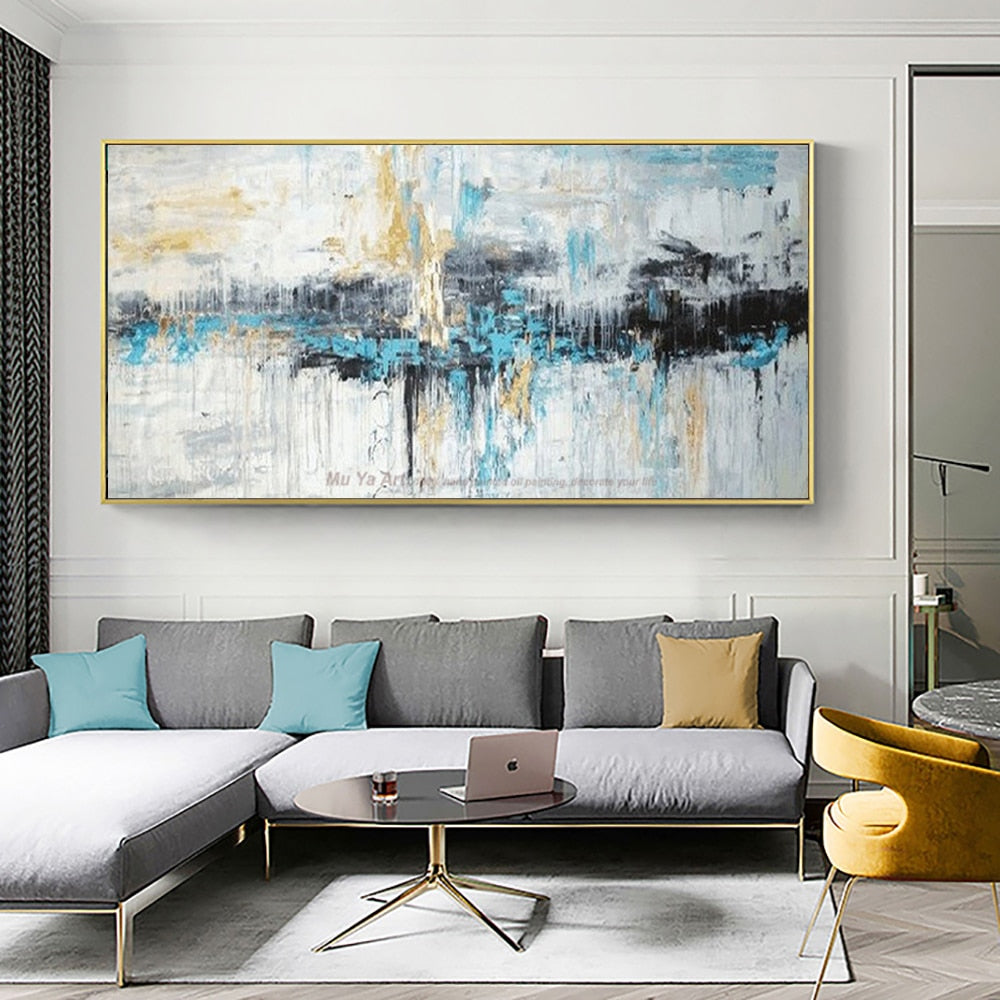
Why Oversized Art Works Better Than Multiple Small Pieces
On a large wall, small artworks compete with empty space — and lose.
Oversized art:
-
Creates a strong visual anchor
-
Reduces clutter instantly
-
Makes the room feel intentional
-
Matches the scale of modern architecture
Instead of decorating the wall, it defines it.
The Ideal Size for Large Walls
For wide walls, aim for artwork that fills:
65–75% of the available width.
Examples:
-
3-meter wall → Artwork around 180–220 cm wide
-
4-meter wall → Artwork around 240–300 cm wide
This proportion prevents the piece from feeling either lost or overwhelming.
Choose Simplicity Over Detail
As artwork gets larger, complexity should decrease.
Large-scale pieces look best when they feature:
-
Minimal compositions
-
Soft color transitions
-
Abstract or organic forms
-
Balanced negative space
Highly detailed images can feel visually exhausting when enlarged.
Let the Artwork Breathe
Oversized art needs surrounding space to feel powerful.
Avoid:
-
Placing shelves or décor too close
-
Adding competing focal points
-
Crowding the wall with additional frames
Negative space enhances impact.
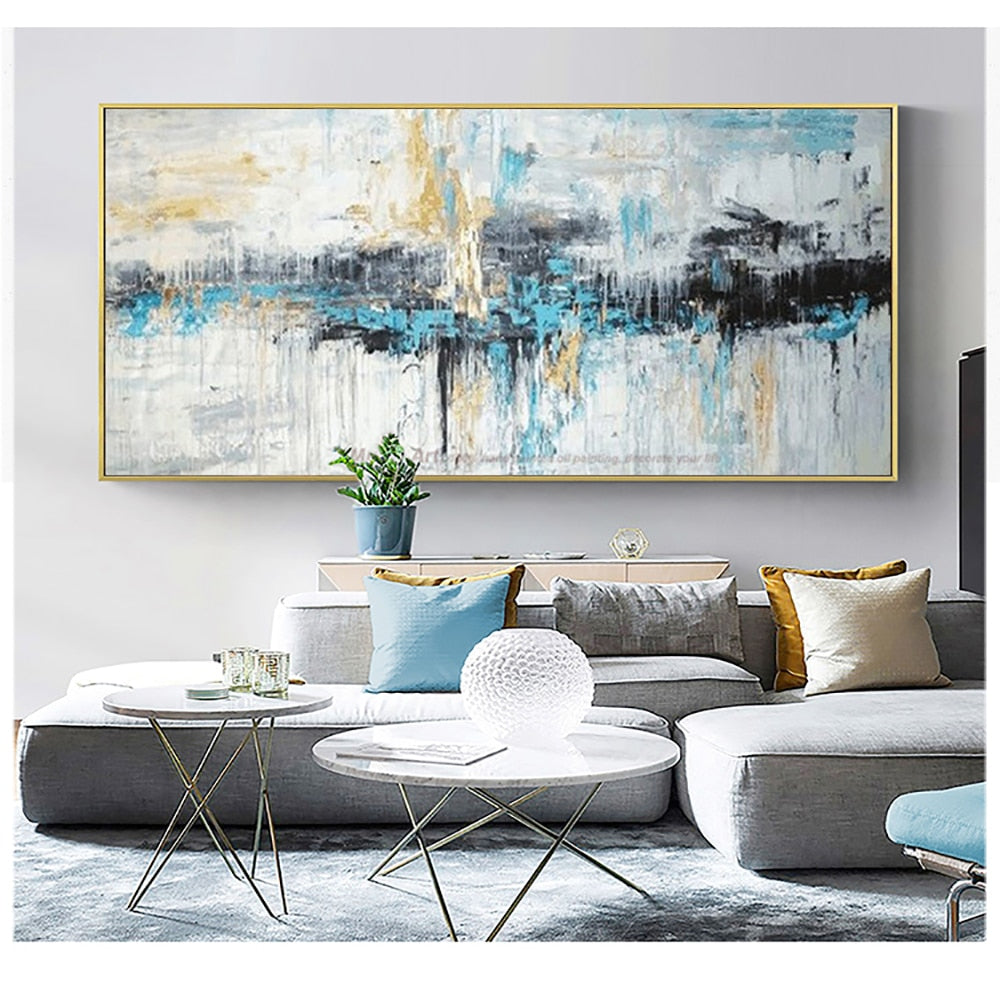
Best Locations for Oversized Wall Art
Living Rooms With Long Sofas
One large canvas above the sofa creates cohesion and scale.
High-Ceiling Homes
Tall walls benefit from artwork that visually lowers and humanizes the space.
Dining Areas With Open Layouts
Oversized art helps define the zone without physical partitions.
Entryways With Empty Vertical Space
A statement piece immediately sets the tone for the home.
Color Strategy for Large-Scale Pieces
When going big, color should stay controlled.
Safe approaches:
-
Neutral palettes (beige, grey, black, soft earth tones)
-
Monochromatic layering
-
One accent color repeated subtly
Too many strong colors can dominate the entire room unintentionally.
Single Panel vs. Multi-Panel Oversized Art
You don’t always need one massive canvas.
Two effective approaches:
Single Oversized Canvas
-
Clean, modern, minimalist feel
-
Strong focal presence
Triptych (3 Panels)
-
Adds rhythm and width
-
Easier to scale across very wide walls
-
Works well in contemporary interiors
Both achieve impact — choose based on architectural proportion.
Common Mistakes When Decorating Large Walls
✖ Using many small frames to “fill space”
✖ Choosing art that is too detailed for its size
✖ Hanging artwork too high
✖ Adding extra décor that competes with the main piece
✖ Being afraid to scale up
Large walls require confidence in proportion.
The Psychological Effect of Oversized Art
Well-scaled large artwork:
-
Makes rooms feel more luxurious
-
Creates a sense of calm order
-
Reduces visual noise
-
Enhances perceived home value
It’s not just decoration — it changes how space is experienced.
The Simple Rule to Remember
Big wall → One big idea.
Let a single artwork carry the visual weight instead of trying to fill every inch.

Final Thoughts
Decorating a large wall isn’t about adding more.
It’s about choosing something bold enough to belong there.
Oversized art brings structure, clarity, and sophistication — turning empty walls into defining features of your home.
Next Step: Learn how to style wall art in small apartments without making the space feel crowded.